From mold strategy to stable production
Injection Molding Capabilities from Tooling Strategy Through Production
PlastiCert brings engineering support, in-house moldmaking, 55- to 500-ton molding capacity and value-added manufacturing together so your team can launch, transfer or improve a complex program with one accountable partner.
Production capacity with options
Production capacity designed for responsiveness
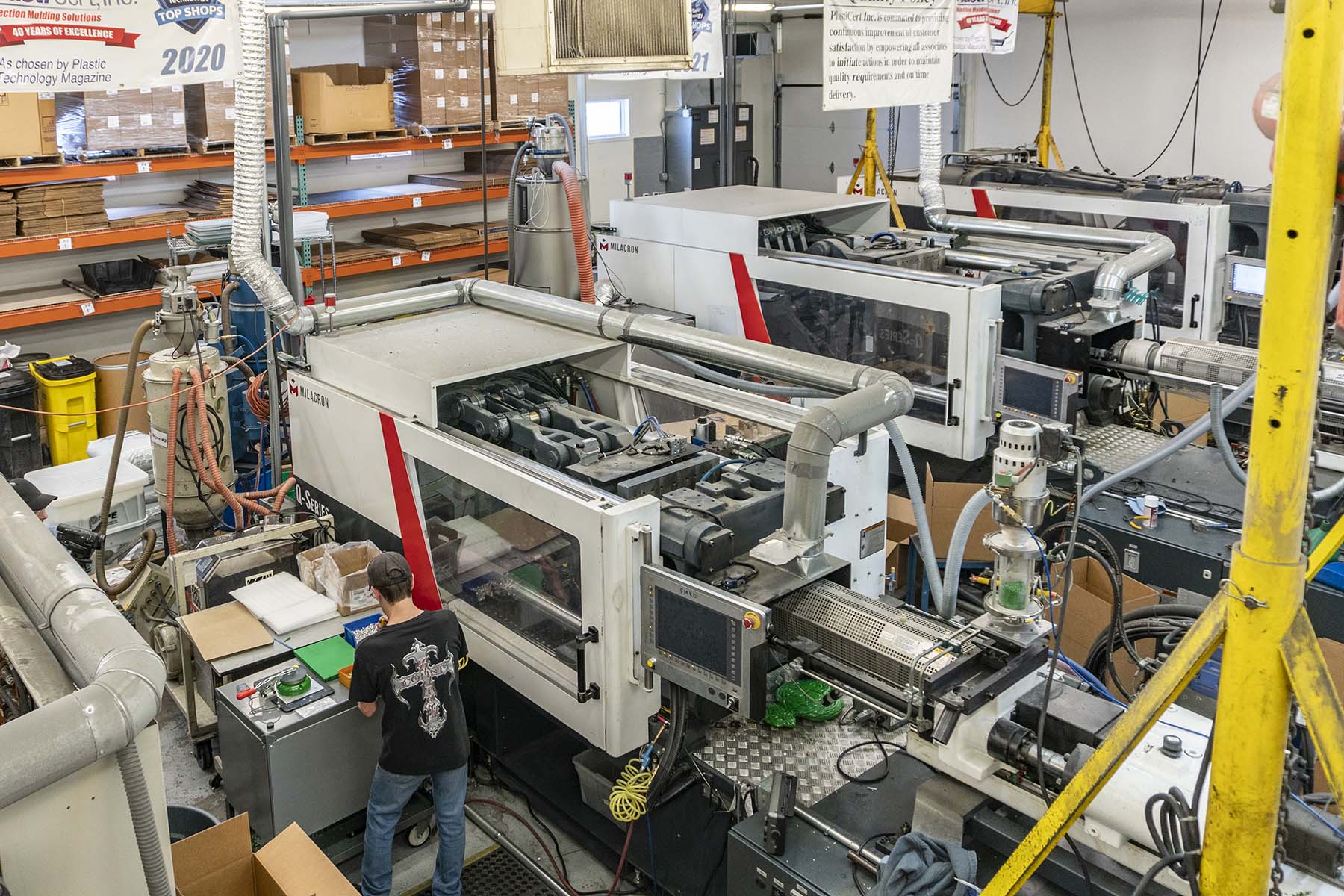
PlastiCert operates Milacron injection molding presses from 55 to 500 tons in vertical and horizontal configurations. Overlapping press sizes provide more flexibility when production demand shifts, planned maintenance is required or a program needs schedule support. That flexibility can help our team respond faster to lead-time needs while reducing dependence on a single machine.
Vertical molding
55-ton press
Supports programs where vertical access or insert-loading requirements influence the process.
Horizontal molding
55 tons (2 presses)
90, 165, 200, 260, 310 and 500 tons
Connected capabilities
Injection molding services that work together
Complex programs rarely depend on one capability. PlastiCert connects engineering, tooling, molding and production support so decisions can be evaluated across the complete manufacturing process.
Short-Run & Low-Volume Molding
Production support for recurring OEM programs that value technical involvement, repeatability and supply continuity over commodity piece price.
Insert Molding
Experienced operators, engineered loading methods and custom fixtures support components with threaded inserts, pins and other molded-in features.
Overmolding
Engineering and process support for components that combine substrates and molding materials in a coordinated production sequence.
Mold Transfer Services
Incoming evaluation, root-cause analysis, in-house tool work, controlled sampling and validation for transferred production programs.
DFM Support
Collaborative review of geometry, material behavior, tooling strategy and manufacturability before production decisions become expensive.
Mold Design & Tooling
Mold design, new-tool construction, modification, repair and maintenance supported by PlastiCert’s vertically integrated tool shop.
Reverse Engineering
Technical evaluation and documentation support when an existing part or tool must be understood, reproduced or transitioned.
Mold Temperature Control
Water and hot-oil temperature-control capabilities support engineered resins and demanding process windows.
Reshoring Injection Molding
Tool transfers, technical recovery and domestic production support for programs moving closer to their customer and engineering teams.


Vertically integrated tooling
Mold design and in-house toolmaking under one roof
PlastiCert’s tool shop supports the complete life of an injection mold. Our team can design and build new aluminum or steel molds, evaluate and repair transferred tooling, modify existing molds and maintain production tools without sending every need to an outside supplier.
Beyond the molding cycle
Value-added support shaped around the program
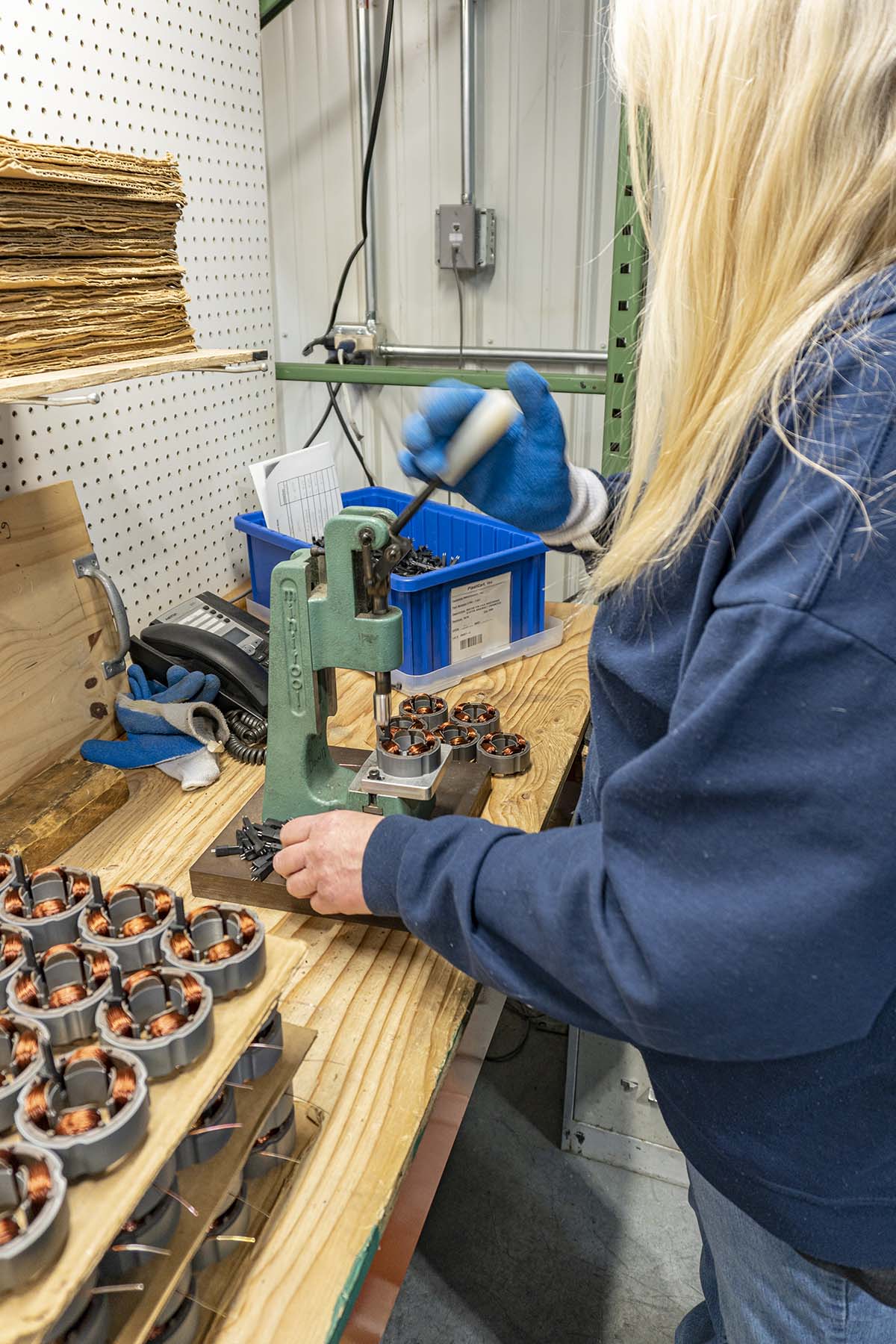
Some components need more than a molded part. PlastiCert can develop secondary operations and customer-specific production support when it improves workflow, reduces handoffs or protects a critical process requirement.
Purpose-built loading, holding and assembly fixtures designed around part and process requirements.
Support for integrating customer-owned or customer-specified machinery into the production workflow.
Light assembly, ultrasonic welding, heat staking, soldering and other program-specific operations.
Work instructions, inspection and validation coordinated with the molding and secondary-operation process.
Common capability questions
What customers should know about PlastiCert’s capabilities
What injection molding press sizes does PlastiCert operate?
PlastiCert operates Milacron injection molding presses from 55 to 500 tons, including vertical and horizontal configurations.
Why is overlapping press capacity important?
Overlapping machine sizes create more scheduling options when production demand changes, maintenance is planned or a program needs additional flexibility. Final machine selection still depends on the mold, material and processing requirements.
Does PlastiCert have an in-house tool shop?
Yes. PlastiCert’s in-house tool shop supports mold design, new-tool construction, repair, modification and ongoing production maintenance.
How is exact shot-size capacity determined?
Shot capacity depends on the installed barrel and screw configuration, material density and the part’s process requirements. PlastiCert Engineering confirms press and shot-size fit during program review.
What value-added operations can PlastiCert support?
Capabilities may include custom fixtures, customer-specific machinery, light assembly, ultrasonic welding, heat staking, pad printing, soldering and other operations developed for the program.
Can multiple capabilities be combined for one program?
Yes. PlastiCert can coordinate engineering support, tooling, molding, secondary operations and validation as one connected manufacturing program when the application requires it.