Insert Molding Services
Insert Molding for Complex Engineered Components
Insert molding combines molded resin with pins, threaded inserts, straight inserts or other components in one controlled production process. PlastiCert brings experienced operators, practical fixture design and disciplined process control together to help customers produce consistent insert-molded parts.
Our team is especially valuable when insert placement, engineered resins, cycle consistency and additional value-added requirements must all work together at the press.
Contact our Engineering Team to discuss your product design, insert requirements and manufacturing goals.
Why customers choose PlastiCert for insert molding
- Operators with hands-on insert-molding experience
- Support for pins, threaded inserts and straight inserts
- Custom loading fixtures developed for repeatable production
- Process discipline for engineered and heat-sensitive resins
- Engineering support for DFM and material-performance considerations
What is insert molding?
Insert molding is an injection molding process in which a separate component is positioned inside the mold before resin is injected around it. The insert becomes part of the finished component after the molding cycle.
Depending on the product, inserts may provide threads, alignment, reinforcement, wear surfaces or another functional interface. The process can reduce downstream assembly, but it also introduces additional variables that must be controlled during every cycle.
Why insert molding programs can struggle
The insert must be loaded correctly, retained securely and protected from movement as the mold closes and resin enters the cavity. At the same time, the molding process must remain consistent.
- Incorrect or inconsistent insert orientation
- Insert movement during mold close or resin flow
- Long or inconsistent loading time between cycles
- Damage to the insert, tool or molded component
- Excessive resin residence time caused by interrupted production cadence
Experienced operators are part of the process
Insert molding is not only a tooling challenge—it is an operational discipline. PlastiCert operators are trained to stage and load inserts accurately while maintaining a dependable press cadence. That experience matters when several inserts must be positioned during every cycle or when the resin has a limited processing window.
A repeatable loading method helps protect part quality, cycle consistency and material integrity. It also gives the manufacturing team a more stable process to monitor and improve.
PlastiCert’s Insert Molding Approach
We look at the insert, part, tool, resin and production sequence as one connected system. The objective is a repeatable process that can be operated consistently—not simply a part that can be molded once.
1. Review the Part and Insert Requirements
We review the insert geometry, orientation, molded features, resin requirements and the way the component must perform. We can support DFM discussions and help the customer understand manufacturing and material-performance considerations.
2. Evaluate Tooling and Insert Retention
The tool must locate and retain each insert correctly without creating unnecessary loading difficulty. Our engineering and in-house tool-shop resources can evaluate the mold, insert interface and practical needs of the production process.
3. Develop the Loading Method
When appropriate, PlastiCert designs custom fixtures that help operators stage and position multiple inserts efficiently. The fixture and work sequence are developed around repeatability, safe handling and a steady production cadence.
4. Validate and Support Production
Sampling and production validation confirm that the insert-loading method, molding process and inspection approach work together. Operators then follow a defined process supported by the manufacturing and quality teams.
Custom Fixtures Help Protect Production Cadence
The fixture shown in this video was designed in-house to help an operator load multiple inserts efficiently and consistently. The objective is not automation for its own sake. It is a practical loading method that supports accurate placement and keeps the molding cycle moving at the required pace.
This combination of experienced operators and purpose-built fixtures is especially valuable when the resin, insert configuration and cycle time all introduce complexity.
PlastiCert-designed fixture supporting the repeatable loading of multiple inserts at the press.
Insert Molding Capabilities
PlastiCert supports insert-molded components that benefit from experienced people, process discipline and engineering collaboration.
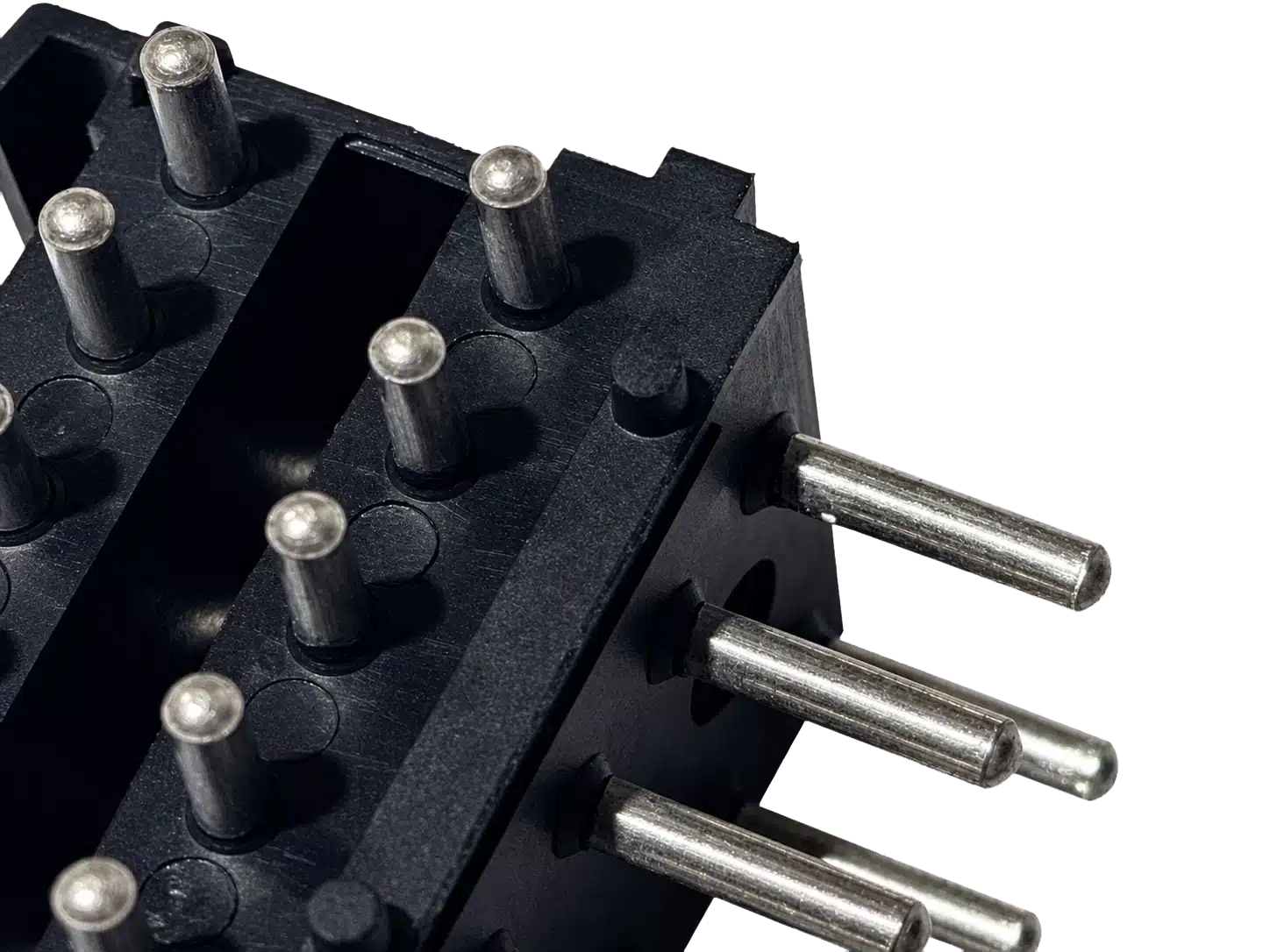
Pins
Insert-molded pins require reliable orientation, retention and loading. The tooling and operating method must work together to keep each pin in the intended position throughout the molding cycle.
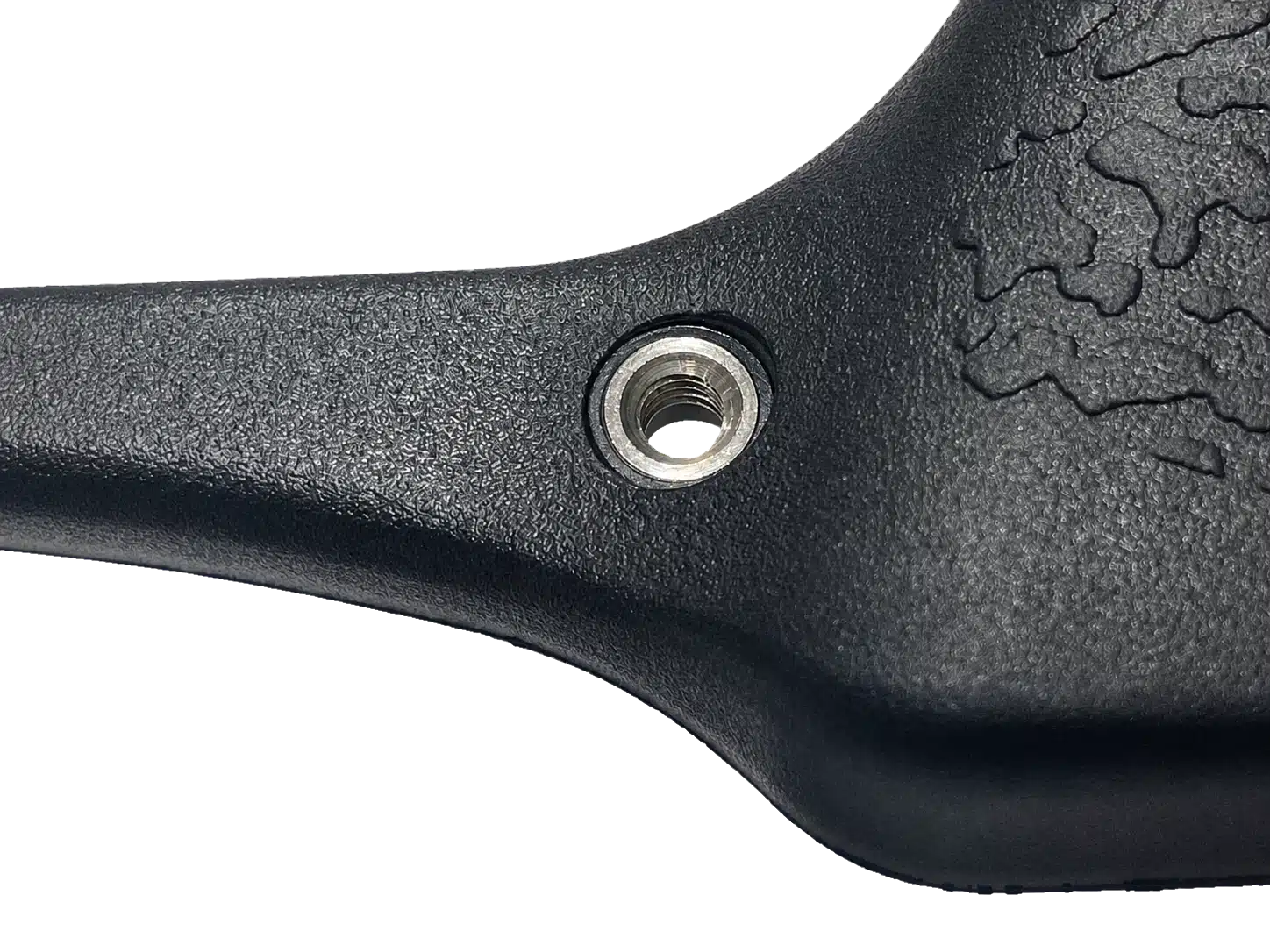
Threaded and Straight Inserts
PlastiCert supports threaded and straight inserts where placement, molded retention and finished-part function must remain consistent from cycle to cycle.
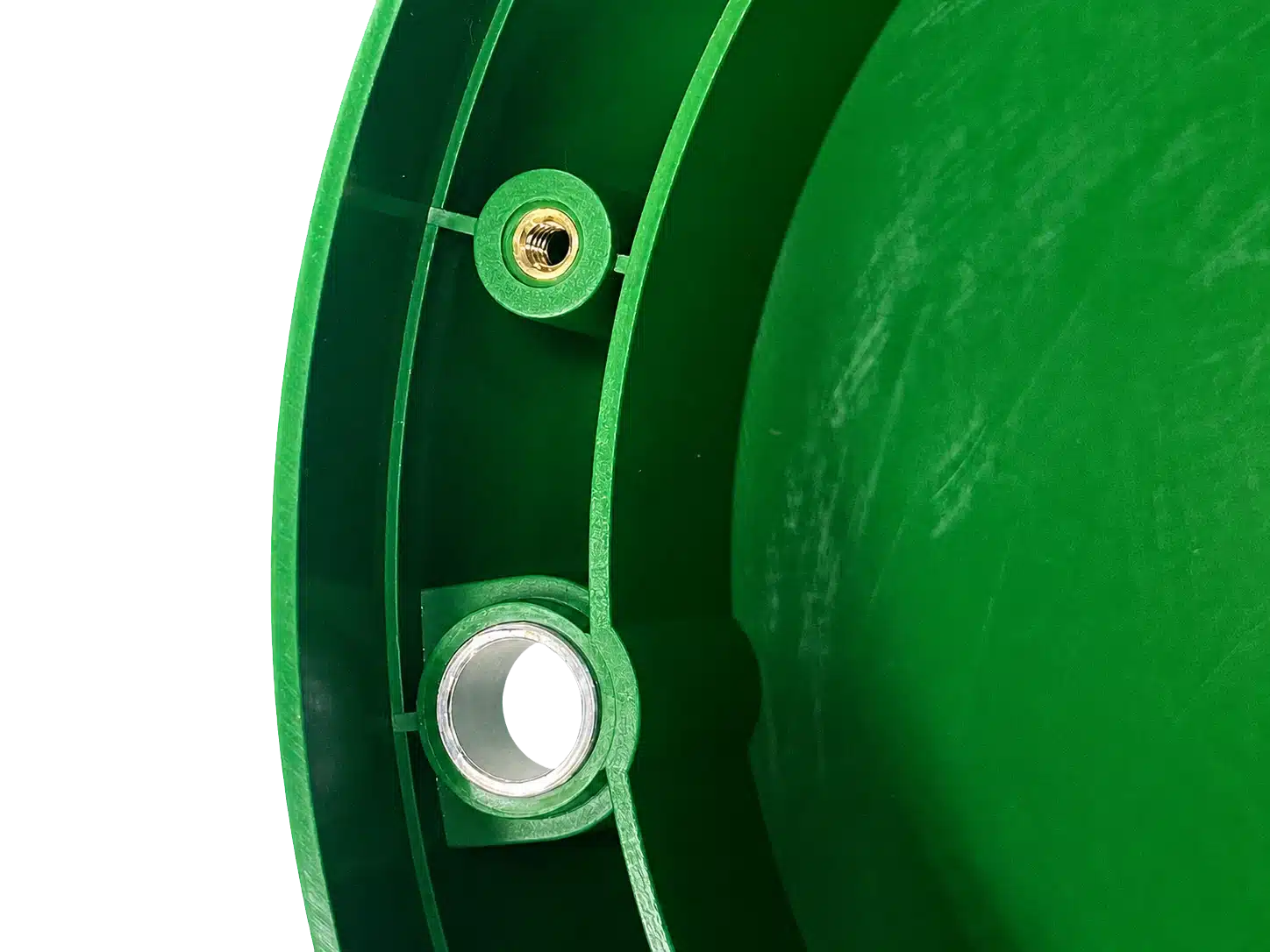
Multiple-Insert Components
Parts with several inserts demand a repeatable staging and loading sequence. Custom fixtures can help the operator position inserts efficiently while supporting the required press cadence.
Cycle Consistency Matters for Engineered Resins
When an engineered resin remains in the barrel longer than the validated process allows, the material may begin to degrade. The specific risk depends on the resin and processing conditions, but inconsistent loading time can increase residence time and disrupt a stable molding process.
That is why insert-loading efficiency is not only a labor consideration. It can be an important part of material and process control. Experienced operators, prepared inserts and well-designed fixtures help the production team maintain a more predictable rhythm.
Engineering Support Without Overcomplicating the Solution
PlastiCert does not perform product design in-house, but our team can support DFM, tooling discussions, insert-loading strategy and material-performance considerations. We help customers understand what the molding process requires and what can be improved before or during production.
Is Your Insert-Molding Program a Fit for PlastiCert?
PlastiCert is a strong fit when a program needs more than a low-cost, high-volume molding source. We add the most value when the part, material, insert configuration or production requirements benefit from collaboration and experienced problem solving.
- Complex engineered resins
- Pins, threaded inserts, straight inserts or multiple inserts
- Production volumes that benefit from attentive process management
- DFM and manufacturing input from an extension of your engineering team
- A troubled program or transferred mold that needs structured evaluation
Learn more about our injection molding capabilities, the industries we serve, our customer relationships and our approach to mold transfer services.
Bring Us the Complexity
If insert placement, material behavior, production cadence or tooling performance is creating risk, our team can review the program and help identify a practical path forward.
Frequently Asked Questions About Insert Molding
What is insert molding?
Insert molding is an injection molding process in which a separate component is placed in the mold before resin is injected. The resin forms around the insert so the insert becomes part of the completed molded component.
What types of inserts can PlastiCert support?
PlastiCert works with applications involving pins, threaded inserts, straight inserts and components with multiple inserts. The right loading and retention approach depends on the insert, tool, resin and finished-part requirements.
Why does operator experience matter in insert molding?
The operator must stage, orient and load each insert correctly while maintaining a consistent production cadence. Experienced operators help reduce loading variation and support a more stable molding process.
How can a custom insert-loading fixture help?
A custom fixture can organize and stage multiple inserts so they can be loaded accurately and efficiently. PlastiCert develops practical fixtures when they can improve repeatability and help maintain the required cycle.
Why is cycle time important when molding engineered resins?
Extended or inconsistent delays can increase the resin’s residence time in the barrel. Depending on the material and process conditions, excessive residence time can contribute to degradation and production problems.
Can PlastiCert help with DFM for an insert-molded part?
Yes. PlastiCert does not perform product design in-house, but our engineering team can support DFM discussions and advise on tooling, insert placement, manufacturability and material-performance considerations.
Can PlastiCert take over an existing insert-molding program?
PlastiCert evaluates transferred molds and troubled molding programs, including insert-molded components. The team reviews the tool, process, material, insert method and part requirements before recommending corrective work or a production plan.
Related PlastiCert Capabilities
Insert-molded components often benefit from early design and tooling collaboration. Explore injection molding DFM support, injection mold design and in-house tooling, overmolding services and recurring short-run production.